
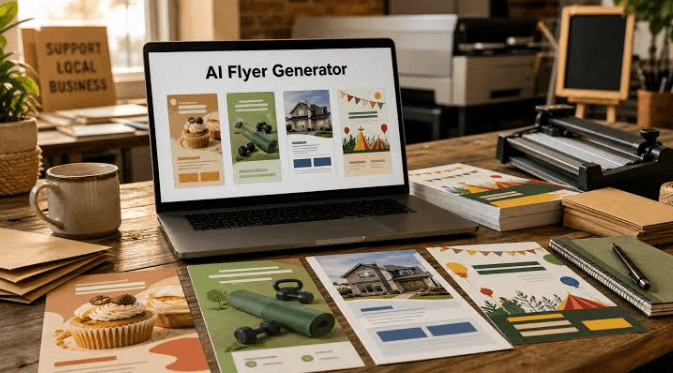
AI-powered flyer design blends data insights with creative control to sharpen impact. It analyzes audience signals, tests color, typography, and imagery, and generates repeatable, brand-aligned templates. The result is faster production, clearer messaging, and cross-channel consistency. Yet questions remain about how to balance automation with human nuance, and which AI adjustments yield the strongest conversions. The discussion turns on optimizing templates for adaptability and measurable performance across channels.
How AI Powers Eye-Catching Flyer Design
AI powers eye-catching flyer design by leveraging data-driven insights to optimize visuals, typography, and layout for maximum engagement. The approach analyzes audience signals, converts them into actionable presets, and continuously refines choices. AI generated color palettes and AI driven typography align with brand goals, reducing guesswork and accelerating iteration. Results translate into sharper messages, heightened recall, and freer creative expression.
Build a Foolproof Flyer Template in Minutes
A proven flyer template can be assembled in minutes by codifying core elements—headlines, imagery, color hierarchy, and action prompts—into a repeatable framework. The approach emphasizes blueprint optimization and template automation to accelerate production, reduce guesswork, and ensure consistency. It enables freelancers and teams to deploy resonant flyers faster, while preserving flexibility for future updates and performance testing.
Choose Color, Typography, and Imagery That Convert
Color, typography, and imagery choices directly shape flyer performance by guiding attention, conveying credibility, and triggering emotion. A data-driven approach shows color psychology influences urgency and trust, while typography pairing enhances readability and hierarchy. Subtle imagery aligned with brand values boosts recall. AI-assisted testing reveals optimal combos fast, enabling designers to balance freedom with consistent, measurable conversion signals.
Automate Copy, Layout, and Cross-Channel Consistency
Automating copy, layout, and cross-channel consistency accelerates production while preserving brand integrity.
AI driven prompts guide copy automation and layout optimization, ensuring typography pairing and imagery selection align with color psychology and brand alignment.
Template automation enables uniform, scalable assets, while cross channel consistency safeguards messaging.
This data-driven approach delivers faster iteration, clearer results, and freedom to pursue creative experimentation without fragmentation.
Frequently Asked Questions
How Do I Ensure Ai-Generated Flyers Avoid Copyright Issues?
AI-generated flyers should rely on original prompts and licensed assets, ensuring licensing transparency and documenting sources; this demonstrates creative compliance and limits risk. The approach fosters freedom while providing data-driven safeguards against copyright issues.
Can AI Design Adapt to Multilingual Audiences Effectively?
Studies show campaigns with multilingual content outperform monolingual ones by up to 40%. AI design can adapt effectively when it employs a multilingual tone and strong cultural adaptation, tailoring visuals and wording to diverse audiences and preserving brand freedom.
What Metrics Measure Ai-Powered Flyer Performance Accurately?
AI-powered flyer performance is measured by click-through rate, conversion rate, and engagement time, with A/B test results guiding optimization; monitoring AI ethics and design equity ensures inclusive impact, transparency, and accountability in metric-driven decisions for freedom-loving audiences.
See also: Y2K Revival: Why 2024 is All About Early 2000s Nostalgia
Are There Accessibility Considerations for Ai-Created Flyers?
Accessible design and inclusive typography are essential considerations for AI-created flyers, ensuring readability and broad reach; they enhance audience engagement, reduce barriers, and support inclusive messaging, aligning with data-driven decisions and the desire for freedom in communication.
How Often Should I Refresh Ai-Generated Flyer Templates?
A sharp balance emerges: the refresh cadence should be quarterly, not annually, to maintain relevance while minimizing chaos; template replacement, guided by performance metrics, sustains engagement and personalization for an audience that values freedom and adaptability.
Conclusion
AI-powered flyer design transforms ideas into high-performance assets. Data-driven color, typography, and imagery choices optimize conversion while templates ensure rapid, brand-consistent production across channels. Automated copy, layout, and testing accelerate iteration, clarifying messages and sharpening goals. The result is scalable, repeatable assets that adapt to audience signals and market shifts—essentially a design engine that multiplies impact. In short, these tools unleash a creativity turbocharger, delivering faster wins with consistently higher engagement and recall.

